
Wax Apple Fruit
The wax apple (Syzygium samarangense)—also known in the United States as the Java apple, bell fruit, or water apple—is a tropical fruit beloved for its crisp texture and mildly sweet flavour. Unlike regular apples (Malus domestica), wax apples are members of the myrtle family and grow on evergreen trees native to Southeast Asia.
Overview
Wax apples are bell‑shaped with thin, glossy skin that can range in colour from pale green and pink to deep red. The fruit has a spongy, almost hollow core and a refreshingly juicy bite. Many American consumers first encounter wax apples at Asian grocery stores, where they are often imported from tropical regions. In countries such as Taiwan and Thailand, premium cultivars—nicknamed “Black Pearls” for their dark colour—are prized, while pale, pink varieties are used primarily for pickles and salads.
Nutritional Profile
Wax apples are low in calories and rich in water. A 100‑gram serving provides roughly 25–35 calories, less than 1 gram of fat and about 5–6 grams of carbohydrates, of which 6.7 grams are natural sugars. They contain modest amounts of vitamin C (11–22 mg), potassium (123 mg) and calcium (29 mg), along with about 1 gram of dietary fibre. Because the fruit is mostly water, it makes a hydrating snack with very little energy—perfect for hot summer days.
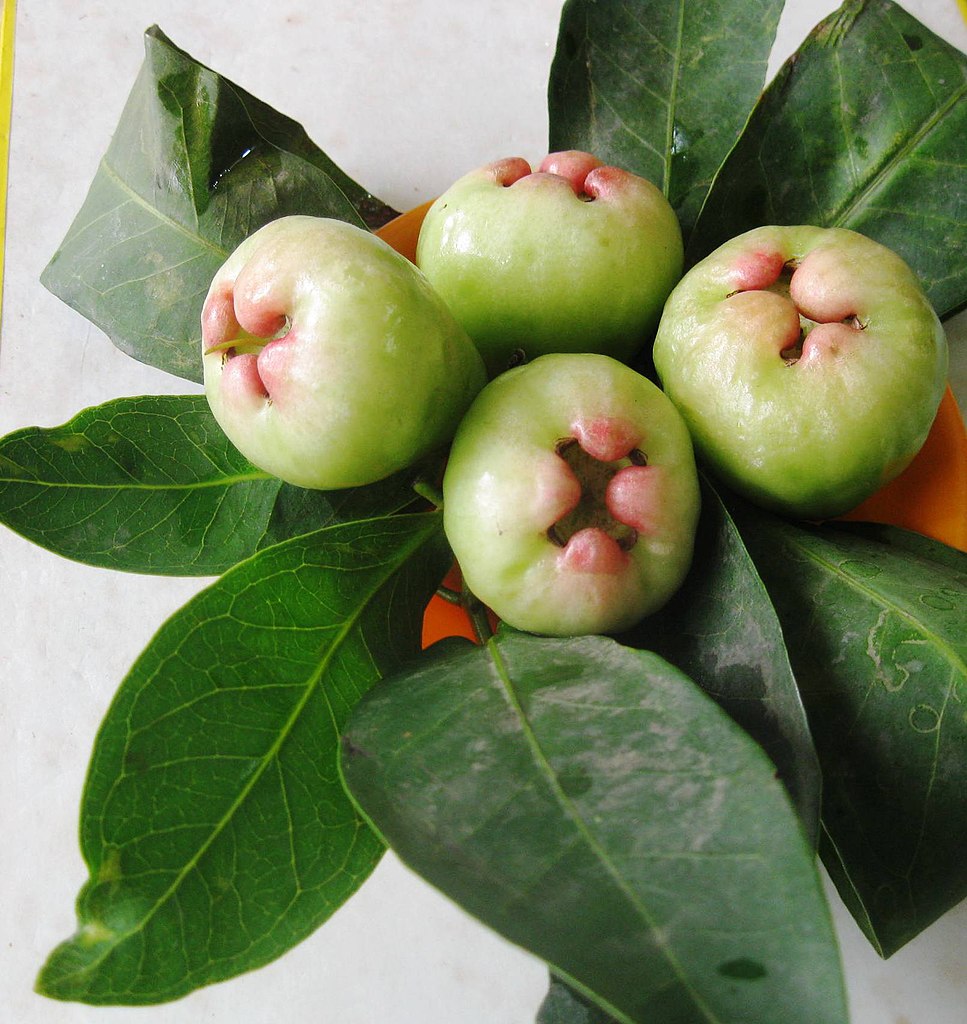
A close‑up view highlights the wax apple’s smooth, shiny exterior and crisp texture.
Wax apple fruit with leaves. The thin, glossy skin and bell‑shaped form distinguish it from common apples.
Varieties & Taste
The taste of a wax apple is often described as a cross between a pear and a watermelon—mildly sweet with an almost rose‑like aroma. Some cultivars are nearly seedless, while others have a small cluster of seeds in the spongy centre. Colours vary from green and white to burgundy, and the flesh ranges from firm to spongy depending on the variety. Because the fruit bruises easily, it is typically eaten fresh, sliced into fruit salads or lightly pickled. In Southeast Asia, the fruit may be stuffed with spiced fillings or enjoyed as a crunchy snack with a sprinkle of salt.
Uses & Serving Ideas
Wax apples are most often eaten raw and unpeeled—its thin skin provides a pleasant crunch. They add a refreshing note to fruit salads, and the hollow core can be stuffed with savoury fillings such as minced shrimp or shredded chicken. In some cuisines the fruit is cooked down into jams or chutneys, while pink varieties are prized for pickling.
Curious about the wax on supermarket apples or how to remove it? Read our pages on why apples are waxed and how to remove wax from apples. If you’re interested in cultivation, learn how to grow a wax apple tree in suitable climates.